
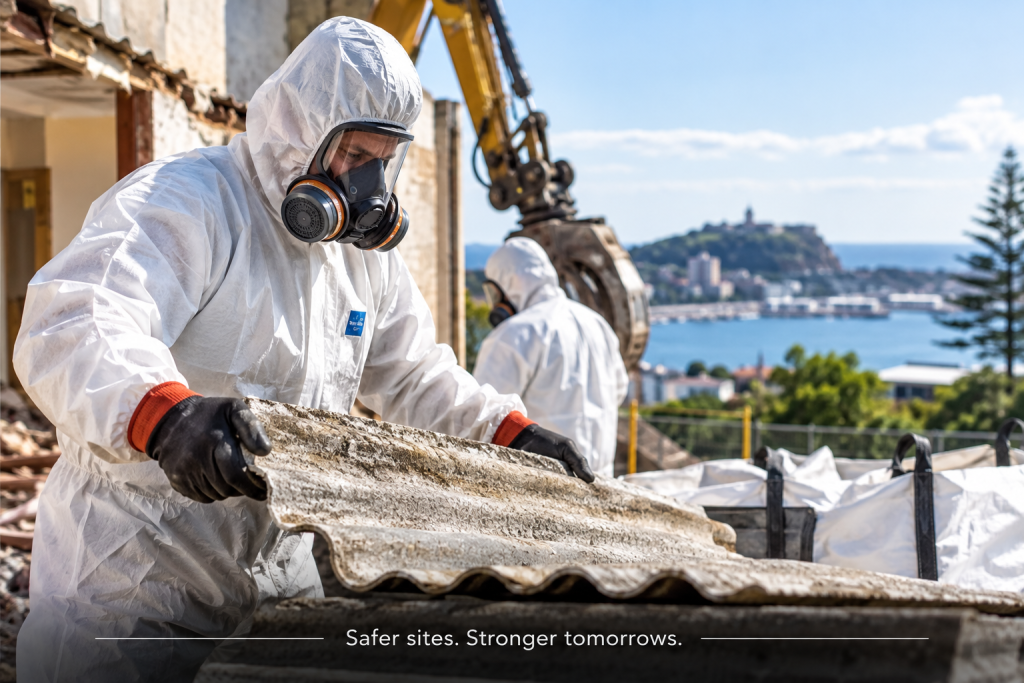
Asbestos is still a consideration for demolition, renovation and redevelopment projects across Newcastle, particularly where older homes, commercial buildings and industrial structures are involved.
If a property was built or renovated before 1990, there is a reasonable chance asbestos-containing materials could be present. In fact, the Australian Government’s Asbestos Safety and Eradication Agency says asbestos remains in millions of Australian residential, commercial and public buildings.
That doesn’t necessarily mean asbestos needs to be removed immediately. Material that is in good condition and left undisturbed may present a relatively low risk. The problem changes when you’re preparing to renovate, demolish or disturb part of the building.
That’s when asbestos needs to be identified and properly managed before the job gets underway.
For Newcastle property owners and developers, understanding the asbestos removal process, likely costs, licensing requirements and disposal obligations can help prevent nasty surprises once work starts.
Why Asbestos Is Still an Issue Across Newcastle
Asbestos was incorporated into a surprisingly wide range of Australian building products.
It may be found in wall and ceiling sheeting, roofing, eaves, cladding, fencing, pipes, electrical meter boards, wet areas, vinyl flooring and other building components.
Age alone doesn’t prove that a material contains asbestos. But if you’re dealing with an older Newcastle property, assuming everything is asbestos-free without proper investigation isn’t much of a strategy.
This becomes particularly important during demolition.
Materials that may have remained untouched for decades can suddenly be broken, cut, drilled, crushed or removed.
We’ve previously looked more closely at identifying and managing these risks in Asbestos Safety: A Critical Consideration in Demolition and Asbestos Removal in Newcastle.
The practical point is simple: find out what you’re dealing with before demolition starts, not halfway through it.
How Much Does Asbestos Removal Cost in Newcastle?
There isn’t one reliable answer to the question, “How much does asbestos removal cost?”
And a contractor quoting a firm price without understanding the site, material and scope would warrant a few more questions.
The cost of asbestos removal in Newcastle can be influenced by:
- whether the asbestos is friable or non-friable
- the amount of asbestos-containing material
- where it is located
- accessibility to the work area
- complexity of removing it without unnecessary disturbance
- containment and exclusion requirements
- personal protective equipment and decontamination controls
- air monitoring and clearance requirements
- packaging and transportation
- disposal charges at an authorised facility
- the wider demolition or redevelopment programme.
A relatively accessible section of non-friable asbestos sheeting is a very different job from friable material within a complicated commercial or industrial structure.
That’s why an asbestos removal quote needs to be considered in the context of the whole job, rather than simply looking for the cheapest square-metre rate.
What Happens Before Asbestos Removal Starts?
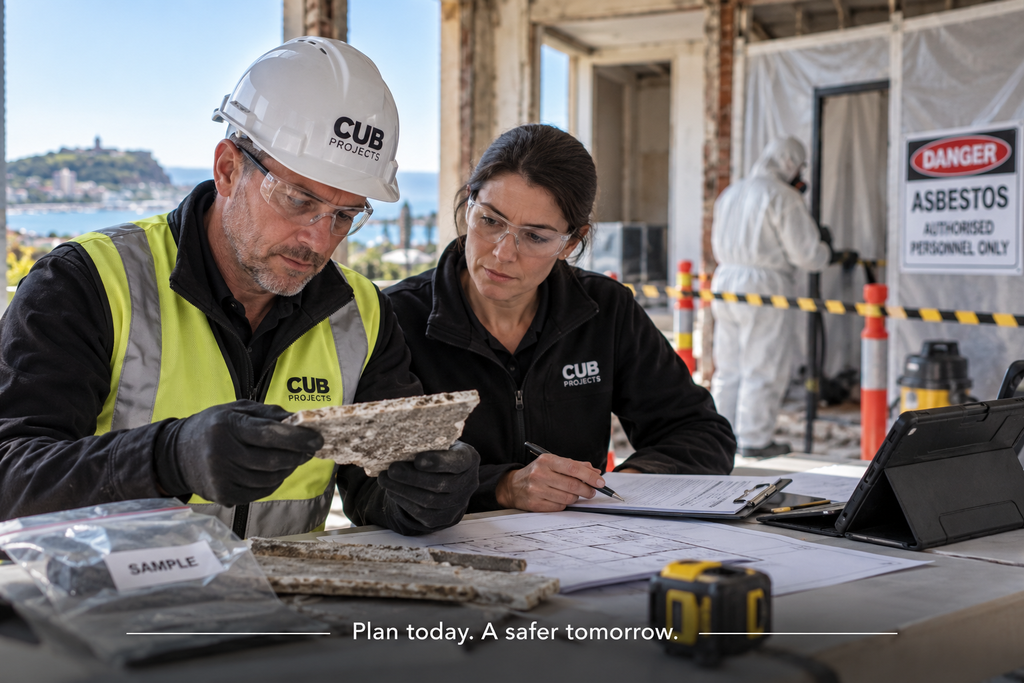
Planning should begin with establishing whether asbestos is actually present, where it is located and what condition it is in.
Depending on the project, this may involve inspection, sampling or assessment by appropriately qualified people.
Once asbestos has been identified, the removal methodology can be developed around the material, location and risks involved.
For licensed asbestos removal work, SafeWork NSW requires a site-specific asbestos removal control plan to be prepared before work begins.
The planning process can include establishing the work area, restricting access, determining appropriate PPE, arranging decontamination controls and planning how the asbestos waste will be packaged, transported and disposed of.
In other words, the removal itself is only one part of the job.
Licensed Asbestos Removal: When Is a Licence Required?
NSW has specific licensing requirements governing asbestos removal.
A Class A asbestos removal licence permits the removal of friable and non-friable asbestos. Any amount of friable asbestos must be removed by a Class A licensed asbestos removalist.
A Class B asbestos removal licence permits the removal of non-friable asbestos. A Class B licence is required to remove more than 10 square metres of non-friable asbestos or asbestos-containing material.
NSW rules do allow limited removal of less than 10 square metres of non-friable asbestos without an asbestos removal licence in certain circumstances.
But legal doesn’t automatically mean sensible.
NSW asbestos authorities strongly recommend using a licensed asbestos removalist, and there is no known safe level of exposure to asbestos fibres.
For property owners, particularly where demolition or substantial renovation is involved, using properly licensed and experienced people removes a lot of unnecessary risk.
What Does the Asbestos Removal Process Involve?
Every project is different, but a professional asbestos removal job will generally involve several stages.
1. Identification and assessment
Suspected asbestos-containing materials need to be identified so the scope and appropriate removal method can be established.
2. Planning the removal
The contractor determines how the material will be removed while controlling exposure to workers, occupants, neighbours and others around the site.
3. Preparing and isolating the work area
Access may need to be restricted and warning signage, exclusion zones, containment and other controls established.
4. Removing the material
The asbestos-containing material is removed using methods designed to minimise the release of fibres. SafeWork NSW specifically prohibits certain practices, including the use of high-pressure water spray and compressed air on asbestos-containing materials.
5. Decontamination
The work area, equipment and people involved must be appropriately decontaminated so fibres aren’t carried elsewhere.
6. Packaging and transport
Asbestos waste needs to be appropriately contained, labelled and transported for lawful disposal.
7. Clearance
For licensed asbestos removal work, clearance requirements apply before the affected workplace or residential area can be reoccupied. For Class A work, clearance inspection and certification must be undertaken by a licensed asbestos assessor.
It’s a controlled process for a reason.
Where Does Removed Asbestos Go?
Asbestos isn’t ordinary demolition waste.
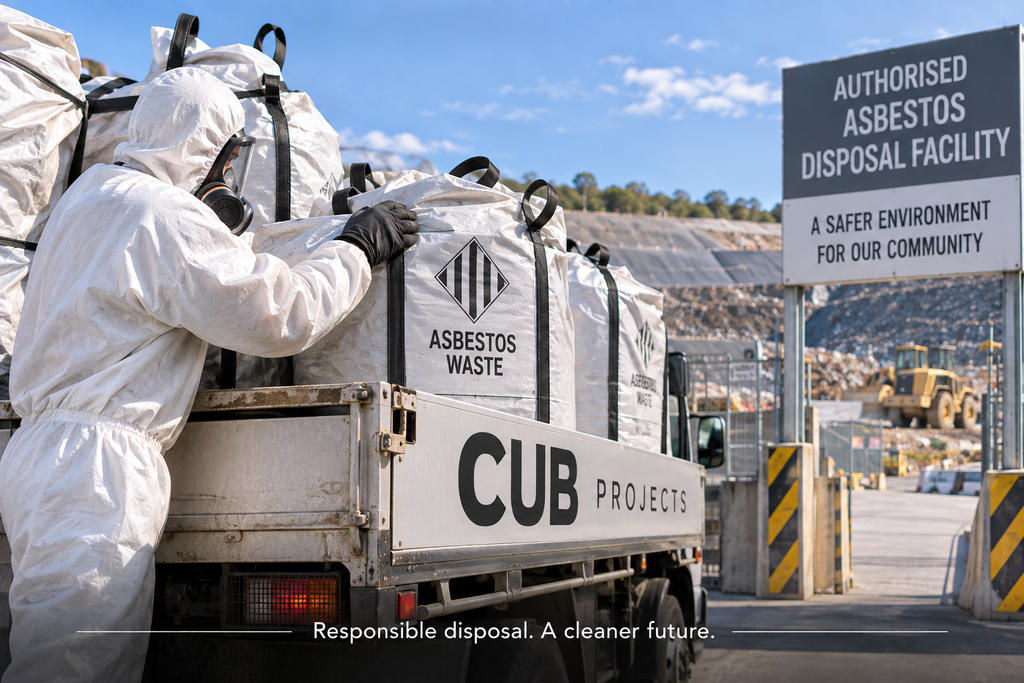
In NSW, asbestos waste can only be disposed of at a landfill authorised to accept it. It cannot legally go into the kerbside rubbish, be dumped, placed into an unsuitable uncovered skip or be reused or recycled.
There are also waste-tracking requirements once specified quantities are exceeded. NSW guidance requires tracking where more than 100 kilograms or 10 square metres of asbestos waste is being transported.
This is an important distinction when considering the broader environmental management of a demolition site.
In Sustainable Practices and Innovations in Demolition Waste Management, we’ve discussed opportunities to recover materials such as concrete, metals and timber from demolition projects.
Asbestos sits in a completely different category.
You don’t recycle it. You isolate it from recyclable demolition material, contain it and send it through the appropriate disposal process.
Asbestos Removal Before Demolition or Redevelopment
Finding asbestos after the excavator has started isn’t the ideal time to develop an asbestos strategy.
For demolition projects involving older structures, asbestos needs to form part of the pre-demolition assessment and planning process.
That allows hazardous materials to be identified and dealt with appropriately before general demolition produces mixed waste or potentially spreads contamination across the site.
It’s also why demolition planning needs to consider more than simply how quickly a structure can be knocked down.
Our article Navigating Demolition in Australia looks at some of the broader regulatory, environmental and safety considerations involved in demolition projects.
More recently, in Choosing a Demolition Contractor in Newcastle: What Property Owners and Developers Should Look For, we highlighted the importance of understanding a contractor’s approach to site-specific hazards before work begins.
Asbestos is a good example of why that matters.
Choosing an Asbestos Removal Contractor in Newcastle
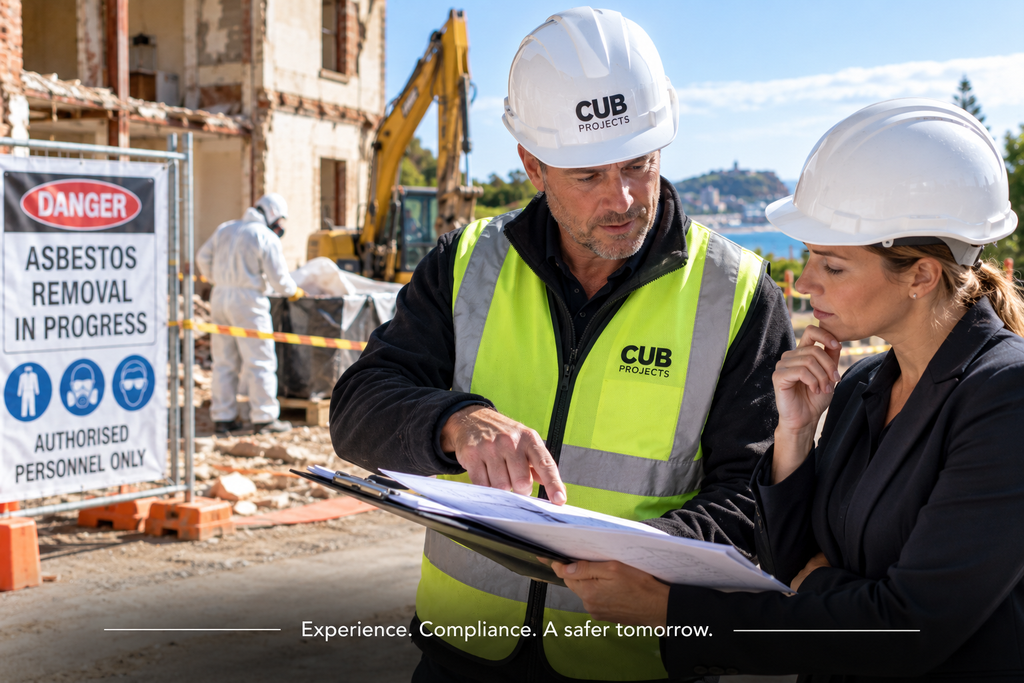
If asbestos removal forms part of your Newcastle demolition or redevelopment project, price shouldn’t be the only question you ask.
Check whether the contractor holds the appropriate licence for the asbestos involved and how the removal will integrate with the rest of the project.
It is also worth establishing:
- how the asbestos has been identified
- who will undertake the removal
- what licence is required
- how the work area will be controlled
- how asbestos waste will be packaged and transported
- where the waste will be disposed of
- what clearance inspection or certification will be provided
- how the removal affects the demolition programme.
SafeWork NSW provides a public licence verification service, so licence status doesn’t need to be taken on trust.
Good planning at this stage can also prevent delays, unexpected costs and arguments about who is responsible once demolition begins.
Frequently Asked Questions About Asbestos Removal in Newcastle
1. How much does asbestos removal cost in Newcastle?
There is no single asbestos removal price that applies to every property. Costs depend on the asbestos type, quantity, location, accessibility, containment requirements, removal method, disposal and any monitoring or clearance requirements. A site-specific assessment provides a much more meaningful figure than a generic square-metre rate.
2. Do I need a licensed asbestos removalist in NSW?
More than 10 square metres of non-friable asbestos requires a licensed asbestos removalist. Any amount of friable asbestos must be removed by a Class A licensed asbestos removalist. Even where limited unlicensed removal may legally be permitted, NSW authorities recommend using a licensed professional.
3. How can I tell if a building contains asbestos?
You generally can’t confirm asbestos simply by looking at a material. Buildings constructed or renovated before 1990 are more likely to contain asbestos. If asbestos is suspected, particularly before renovation or demolition, appropriate inspection and testing should be undertaken.
4. How long does asbestos removal take?
It depends on the amount, type and location of the asbestos and the controls required. A small, straightforward removal may be considerably quicker than asbestos removal across a large commercial, industrial or demolition site. Clearance requirements can also affect the programme.
5. Where is asbestos waste disposed of in Newcastle?
Asbestos must be taken to a waste facility authorised to accept asbestos. Acceptance requirements can change, so the disposal facility should be confirmed before removal begins. A professional removal contractor should incorporate lawful transport and disposal into the removal plan.
6. Does asbestos have to be removed before a building is demolished?
Where asbestos-containing material will be disturbed by demolition, it needs to be identified and appropriately managed as part of the demolition process. Removing identified asbestos under controlled conditions before general demolition helps prevent fibres and asbestos waste from contaminating the broader site and demolition materials.
Planning Asbestos Removal in Newcastle?
If you’re planning demolition, redevelopment or major site works in Newcastle and asbestos may be present, deal with it early.
Identifying asbestos, establishing the correct removal process and coordinating that work with the wider demolition programme can save considerable trouble once machinery arrives on site.
CUB Projects can help you plan the demolition properly from the outset, including the management of asbestos and other site-specific risks.
If you’re considering a demolition project in Newcastle or the surrounding region, contact CUB Projects to discuss the site, the work involved and what needs to happen before demolition begins.
References and Further Reading
SafeWork NSW, Class A Asbestos Removal Licence
https://www.safework.nsw.gov.au/licences-and-registrations/licences/class-a-asbestos-removal-licence
SafeWork NSW, Class B Asbestos Removal Licence
https://www.safework.nsw.gov.au/licences-and-registrations/licences/class-b-asbestos-removal-licence
SafeWork NSW, Working as a Licensed Asbestos Removalist
https://www.safework.nsw.gov.au/licences-and-registrations/licences/class-a-asbestos-removal-licence/working-as-a-licensed-asbestos-removalist
Asbestos NSW, How to Safely Remove Asbestos
https://www.asbestos.nsw.gov.au/removal-and-disposal/how-to-safely-remove-asbestos
Asbestos NSW, Unlicensed Asbestos Removal
https://www.asbestos.nsw.gov.au/removal-and-disposal/unlicensed-asbestos-removal
Asbestos NSW, Disposing of Asbestos Waste
https://www.asbestos.nsw.gov.au/removal-and-disposal/disposing-of-asbestos-waste
Asbestos Safety and Eradication Agency, Householders and Home Renovators
https://www.asbestossafety.gov.au/about-asbestos/practical-guidance/householders-and-home-renovators